Showing posts with label tea. Show all posts

Tuesday, January 24, 2023

Cranberry herbal tea

Each cup of cranberry tea contains various minerals and vitamins like Vitamin C, K and E. All these nutrients are vital for good health.

Cranberries are a rich source of antioxidants. Cranberries have several antioxidant compounds, not one, mainly contained in the skin of cranberries. There are anthocyanins and flavonols in this tea, along with caffeic acid, resveratrol, and numerous tannins, along with many other active ingredients.

During the 17th century, American voyagers and sailors carried dry cranberries (the key ingredient of cranberry tea) to prevent scurvy.

Cranberry tea can aid in weight loss, by eliminating extra water from human body and acting as a diuretic.

Drinking this tea helps prevent the occurrence of sores. It also acts as a natural antiseptic, inhibits the growth of bacteria or other microbes in the teeth cavities, and helps prevent oral diseases like gingivitis.

There are more than 20 antioxidant compounds found in cranberry tea, ranging from anthocyanins to tannins and flavonols; this high concentration makes this tea an excellent means of preventing oxidative stress and neutralizing free radicals.

Cranberry tea can be made by boiling: cranberries, sugar, lemon juice, cloves, and cinnamon sticks with water. Then, cover and steep cranberry mixture for one hour.
Cranberry herbal tea

Sunday, January 23, 2022

Bilberry leaves tea

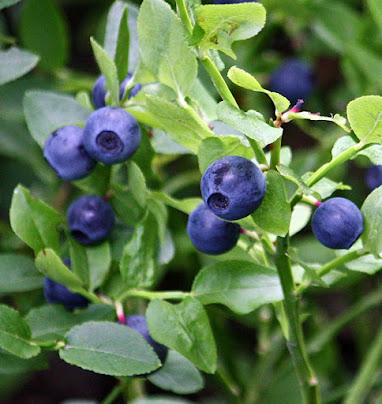
Bilberry (Vaccinium myrtillus L.) is a deciduous shrub growing to 50 cm, with elliptical leaves. The flowers are single on short stems. The fruits are berries, globular, dark purple, juicy and sour.

The bilberry leaf chemical agents that are known to prevent free radicals from causing oxidative damage in cells. The leaves contain tannins, flavonoids, and a small amount of arbutin.

Bilberry leaves are used as herbal tea and have also been shown to exhibit strong antioxidant activity of phenolic compounds.

Traditionally, a tea made of the leaves is a remedy for diabetes if taken for a prolonged period.

Tannins can help improve diarrhea, as well as mouth and throat irritation, by reducing swelling (inflammation). Flavonoids in bilberry leaf might also improve blood circulation in people with diabetes. Circulation problems can harm the retina of the eye.
Bilberry leaves tea

Wednesday, October 6, 2021

Bioactive compounds in blueberry leaves tea

Blueberries (Vaccinium spp.), generally regarded as an excellent source of dietary antioxidant, are one kind of popular and healthy fruits worldwide.

The main bioactive compounds in blueberry leaves are similar as in other berry fruits, i.e., phenolic acids and esters, flavonols, anthocyanins, and procyanidins, which could also serve as an effective antioxidant resource or functional food ingredient. They have a number of different health benefits, including lowering fat levels and potentially protecting against hepatitis C. The leaves are also one of the richest sources of chlorogenic acid.

In 2008, researchers conducted a study published in the Journal of Medicinal Food that focused on quantifying phenolic compounds and their antioxidant properties in blueberry leaf infusions, which have been shown to contain antidiabetes properties. Researchers found that the wild blueberry infusion exhibited the highest antioxidant capacity and free radical–scavenging ability.

Blueberry leaf tea were actually the simple water infusions of the leaves without any conventional tea processing steps. The tea sometimes flavored with dried blueberries to give it fruitier flavor.
Bioactive compounds in blueberry leaves tea

Wednesday, July 29, 2020

Blueberry leaves tea

Use 1-2 teaspoon finely chopped fresh or dried blueberry leaves per cup of tea. Steep in near-boiling water for about 5 minutes before serving. Sweeten with honey or stevia leaf.

Blueberry leaves are rich in antioxidants, which have a number of different health benefits, including lowering fat levels and potentially protecting against hepatitis C.

Lowbush blueberry (Vaccinium angustifolium) leaves is a source of proanthocyanidins. Anthocyanins in the leaves have been found to be a part of the defense mechanism against photoinhibition, along with other mechanisms in photorespiration and the cycle of xanthophylls.

The antioxidant content in blueberry tea was sufficiently high that it showed great potential in helping treat the physiological symptoms of neurodegenerative disease, such as reduced brain function and mental impairment.

Researchers investigated the phytochemical profile of V. angustifolium leaves, and demonstrating its high similarity with the highbush blueberry leaves. They identified ten different compounds in an ethanolic leaf extract. Chlorogenic acid was the most abundant phenolic; it was 30 times more concentrated in the leaf extract (31.19 mg/g dry matter) than in the respective fruit (1.54 mg/g dry matter) and over 100 times more concentrated than in the respective stem or root extracts (0.09 and 0.03 mg/g dry matter, respectively).

Moreover, researchers also detected in significant amounts the flavan-3-ols epicatechin and catechin and in ratio roughly 1:1; they also quantified four quercetin glycosides (in total 9.65 mg/g dry matter), as well as quercetin aglycone (1.24 mg/g dry matter).
Blueberry leaves tea

Saturday, August 26, 2017

The family of blueberries

Blueberries Family
Blueberries (family, Ericaceae; genus, Vaccinium) are indigenous to North America.

The Vaccinium genus consists of many species, which have edible fruits.

Like bilberry (V. myrtillus), cranberry (V. macrocarpon), lingonberry (V. oxycoccus), and huckleberry (V. ovatum and V. vaccillans), blueberries are valued fruits.

Native American enjoyed fresh blueberries and also dried them for use with other foods. They are believed to use blueberry roots and leaves as medicine.
A tea made from blueberry leaves was considered good for blood and blueberry juice was used to treat cough. These early insights and experiences about health benefits of blueberries are now being corroborated.

Experts showed that blueberry leaves have higher phenolic and antioxidants values than the fruit tissues. In laboratory studies, dried extract of blueberries having high antioxidants reversed signs of aging.

Other studies have shown that specific wild blueberry extracts may have anti-adhesion and chemopreventive properties.

Thus, the blueberries are emerging as a functional fruit for improving health and quality of life.
The family of blueberries

Wednesday, December 14, 2016

Native American and blueberry

Wild berries are an important source of food for birds and other wild animals and native people enjoyed them long before the first European discovered North America.

Blueberries often are used to symbolize many different things in literature, art, mythology, and everyday life. It has been thought that the red color of many berries symbolizes life or the blood of mythical creatures.

French explorer, Samuel de Champlain, found native people gathering wild blueberries for use during the winter months. They dried them in the sun, beat them onto powder which was added to parched meat and the resulting product was used as seasoning for soups and stews and curing of meats.
The Northeast Native American tribes revered blueberries and much folklore developed around them. The blossom end of each berry, the calyx, forms the shape of a perfect five-pointed star; the elders of the tribe would tell of how the Great Spirit sent ‘star berries; to relive the children’s hunger during a famine.

Parts of the blueberry plant were also used as medicine. A tea made from the leaves of the plant was thought to be good for the blood.

North American Indians preserved blueberries in various ways. In Northern areas, the Inuit placed the berries in seal oil, or stored them in leather bags deposited in the permafrost. The berries were also dried in the sunshine or by a fire.
Native American and blueberry

The Most Popular Posts

BannerFans.com