Showing posts with label highbush. Show all posts

Friday, September 6, 2024

Highbush Blueberries: Growth, Cultivation, and Global Importance

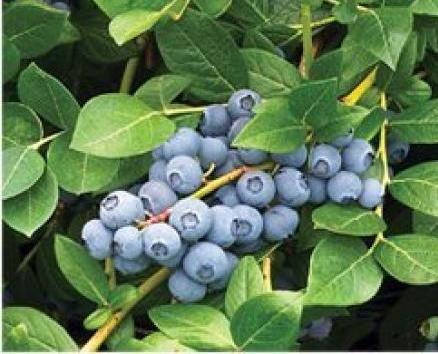
Highbush blueberries (Vaccinium corymbosum and Vaccinium australe) are deciduous shrubs that range from 1.5 to 7 meters (5 to 23 feet) in height. These plants thrive in sunny, acidic environments with a soil pH between 4 and 5. Adapted to temperate climates, they are most commonly found in regions such as North America and Europe.

Highbush blueberries are shallow-rooted, and notably, they lack root hairs. This makes their fine, fibrous roots reliant on open, porous soil for healthy growth. The presence of mycorrhizal fungi in the soil further supports their development, assisting with the absorption of nutrients like phosphorus and nitrogen, which are crucial for plant health. These symbiotic fungi play a vital role in maintaining the plant's vigor, especially in poor soils.

Reaching full production takes 6 to 8 years, after which these plants yield bountiful harvests. Fruit intended for the fresh market is hand-harvested to minimize damage, ensuring high quality for consumers. Conversely, blueberries harvested by machines are often used for processing into products such as jams, juices, and frozen fruit.

In terms of geography, highbush blueberries are primarily cultivated in the United States, with Michigan, New Jersey, North Carolina, and Oregon being major producers. Canada, particularly British Columbia, also contributes significantly to production. Other important regions include Europe, New Zealand, and Australia, where the demand for both fresh and processed blueberries continues to grow.

The highbush blueberry industry has expanded in recent years due to the increasing recognition of the fruit's health benefits, including its high antioxidant content, which supports cardiovascular and cognitive health. Consequently, global production has surged, driven by the fruit's popularity in health-conscious markets.
Highbush Blueberries: Growth, Cultivation, and Global Importance

Sunday, October 23, 2016

Blueberry irrigation

Adequate soil moisture is necessary for commercially acceptable vegetative growth, flower-bud development, and yield of cultivated blueberries.

Young, newly planted blueberries are particularly sensitive to soil moisture stress. Highbush blueberries require a constant moisture supply.

A mature planting should receive about 1-3 in (2.5 – 5 cm) of water per week during the entire growing season, or at least through the harvest period. This requires about 600-1200 gal per 1000 sq ft (2280-4560 L per 93 sq ft).

To provide an adequate water supply to plants, it is important that:
*The soil root zone be large enough to supply the plant
*The soil water supply be replenished frequently enough to avoid water stress
*The water freely infiltrates the soil without leaching nutrients to depths below the root zone
*An effective water-absorbing root system is maintained throughout the plants life cycle

Irrigation is an artificial application of water to the soil usually for assisting in growing blueberries. In crop production it is mainly used in dry areas and in periods of rainfall shortfall but also to protect plants against frost.

The percentage of plant survival through second year also increases from 50 to 83% with irrigation.

Irrigation is not commonly used in lowbush blueberry production. However the vegetative growth and yields can be increased by irrigation in years when soil moisture is low.
Blueberry irrigation

Thursday, December 11, 2014

Harvesting blueberries

Blueberries are one of very few fruits native to North America, which continues to be the largest producer of them in the world. They should harvest when they are fully colored and handling should be minimized as they are very delicate and damage easily and the bloom on the fruit surface can be destroyed.

The berries are very small and have to be picked by hand and hand harvesting of highbush blueberries is labor intensive and requires as many as 1150 hours of labor per hectare.

To get the highest quality berries, harvest 4 to 6 days after the berry turns completely blue. If picked earlier, the berries will not be as large and the flavor will not fully developed.

Over the row, self-propelled vibrating machines have been developed for harvesting   blueberries. The use of mechanical vibratos nearly triples worker productivity and reduced harvesting cost by 55%.

Even though the picking cost is lower for mechanically harvested fruit, more berries are picked per hectare by hand and they have a higher value.

Harvesting blueberries, low bush blueberries like there are in Maine, was accomplished using a tool called a rake. A rake is an odd shaped tool that has a handle. Low bush blueberries require the harvester to get drown to ground level.

Mixtures of soft ripe and hard ripe fruits should be avoided as the over-ripe ones can speed deterioration.
Harvesting blueberries

Monday, July 7, 2014

Blueberry species

The genus of blueberries is widespread, with species being found in the Himalayas, New Guinea and the Andean region of South America.

There are about 400 species of blueberry (Vaccinium sp., family Ericaceae), which are concentrated in the montane tropics but extend to all continents except Australia.

Blueberries are among North America’s few cultivated native fruits. They have become one of the most popular fruits for home gardeners for their ornamental value, pest resistance and delicious berries.

Blueberry varieties have been originated by hybridization and breeding of native wild species.

Northerners grow two species of blueberries: Vaccinium corymbosum, highbush and V. gustifolium, lowbush. Southern gardeners tend to raise V. ashei, rabbiteye blueberry.

Like other ericaceous plants, blueberries thrive in acid soils with a pH between 4.2 and 5.5. Although they will grow in other soil, it is in these that best growth and best fruit production occur.

All commercial blueberry species are deciduous and have a typical bush height at maturity of 1 foot in lowbush blueberry, 6 to 8 feet in highbush and 12 feet in rabbiteye blueberry.
Blueberry species 

Sunday, June 3, 2012

Half-high highbush blueberry

Half-high high bush blueberry are species hybrid or backcross derivatives of lowbush-highbush hybrids usually involving (V. corymbosum x V. angustifolium).

These plants are the products of the Minnesota and Michigan breeding programs. These are hybrids between the highbush and lowbush types.

The bushes are short-statured, cold hardy and similar to highbush plants in fruit characteristics. Cultivars include ‘Northland’, ‘Northsky’ and Northblue’.

Half-high blueberries such as North Country and Northsky, are very hardy and grow only 18 to 24 inches high. They can be grown in smaller pots.

The plant were breed to be adaptable to the extreme cold and heavy snowfalls of most northerly states.

It was reported that Northblue bore a normal crop with a minimum of 30 cm of snow over, which protected the plant from winter temperatures of -37 °C.
Half-high highbush blueberry

Wednesday, October 5, 2011

Southern highbush blueberry

Southern highbush blueberry (V. corymbosum hybrids with V. darrowi, V. ashei and other southern Vaccinium species).

Southern highbush blueberries over hybrids that may contain genetic material from two, three and sometimes four Vaccinium species.

It was developed for hybridization of the northern highbush with southern species, is well adapted to planting in South Carolina, Georgia, Florida ,the Gulf States and eastern Texas.

Breeders have combined the characteristics of northern highbush and southern highbush blueberries to yield cultivars that are adapted to the deep south, with a shorter fruit development period and very early maturity.

Southern highbush were specifically hybridized for superior fruit, soil adaptability, heat tolerance and low winter chilling.

Southern highbush plants are similar in most ways to northern highbush plants, but they have low winter chilling requirements and can be grown into southern Florida.

Southern or ‘low chill’ highbush are generally adapted to the sane mild climatic regions as rabbiteye blueberries and being established in small commercial and trial plantings from southern Virginia to northern Florida and along the Gulf Coast to east Texas and central Arkansas in the United States and in subtropical regions in Australia.
Southern highbush blueberry

Tuesday, February 16, 2010

Northern highbush Blueberry (V. corymbosum L.)

Northern highbush Blueberry (V. corymbosum L.)
There are three commercially blueberry species are recognized, along with two interspecific hybrids:
1. Northern highbush blueberry (V. corymbosum L.).
2. Rabbiteye blueberry (V. ashei Reade).
3. Lowbush blueberry (V. angustifolium Air, and V. myrtilloides Michx)
4. Southern highbush blueberry (V. corymbosum hybrids with V. darrowi, V. asheim, and other southern Vaccinium species).
5. Half-high hogbush bleuebrry (V. corymbosum x V. angustifolium).

Northern highbush Blueberry (V. corymbosum L.)
The main cultivated species of blueberry, its native range is sunny acidic, swampy areas of eastern North America, from Nova Scotia west to Wisconsin and south to northern Georgia.

Commercial cultivars of highbush blueberry may also have been products of hybridizations owth V. australe, especially in southern regions; also with V. lamarckii and V. brittonii in the north; and with V. arkansanum, V. simulatum, and V. marianum in the south.

Michigan, the leader in highbush blueberry production in the United States grows over 20 cultivars, with ‘Jersey’, ‘Bluecrop’, ‘Elliot’, and ‘Rubel’ making up the top four.
Northern highbush Blueberry (V. corymbosum L.)

Sunday, January 31, 2010

Highbush Blueberries

Highbush Blueberries
“High bush blueberry” is the name given to cover the taller species of shrub by Vaccinium species that are grown mainly for their fruit crops and it includes the northern highbush rabbiteye and southern highbush blueberries. Add Image

The latter are relatively recent hybrid introductions that should not be confused with selections of northern highbush suitable for some of the warmer climate areas of the southern states and that are occasionally called southern highbush blueberries.

As the name implies, highbush blueberries are borne on bushes taller than the lowbush blueberries.

Their cultivars are grown in all the commercial and garden planted blueberry fields or plots around the world where climate and soil conditions are suitable.

There are cultivars that suits climates where winters are long and cold, cultivars that suit much warmer, subtropical regions and others, of course, that suit areas in between these two extremes.

Suitably basically boils down to the “chilling requirements” of the different blueberry groups.

Blueberries require a period of winter dormancy or rest before they will break dormancy and come into growth.

The number of accumulated hours of chilling varies considerably from species to species and cultivar to cultivar.

It is common for plants to receive their requirements met by mid winter but normal winter temperatures keep the plants dormant until spring.

Sometimes bud may start to develop of there are several days of temperatures over 46 degree F on winter which makes them vulnerable when normal winter temperature resume.
Highbush Blueberries

Sunday, June 14, 2009

Roots of Blueberry

Roots of Blueberry
The highbush blueberry has two major types of roots:
1. Pencil-thick storage and anchor roots
2. Fine thread like roots, often only 50 um in diameter

The latter are the feeder roots responsible for nutrient absorption.

The roots are composed of a thin root cap covering the apical meristem.

The cap is somewhat mucilaginous and aids the root’s penetration of the soil while protecting the maristematic tissue.

The meristem tissue undergoes rapid cell division and is responsible in part for adding new cells to the root.

The root structure 12-25 mm behind the apex shows a homogenous cortical region of 3-4 cell layers about 40 um thick.

The cells are simple parenchyma and alternate with one another in successive concentrate layers.

The cortex is surrounded by a poorly developed epidermal layer of symmetrical cell, the outer surfaces of which are convex.

The cortex itself surrounds a single layer of cells called the endodermis, beneath which lies the vascular cylinder, composed of the vascular system and associated parenchyma.

This inner cylinder, also called the stele, is about 30 um in diameter. The blueberry root has no root hairs.

The anatomy of older roots is similar to that of the stem.
Roots of Blueberry

Thursday, April 16, 2009

Blueberry: Highbush and Rabbiteye

Blueberry: Highbush and Rabbiteye
The blueberry belongs to the Ericaceae family, subfamily Vacciniaceae. Blueberries are found in many areas of the world but have gained greatest acceptance in the US and Canada.

The true blueberries belong to the ancient genus Vaccinium, subgenus Cyanococcus.

The blueberry has specific requirements regarding climate and soil.

The blueberry is a many seeded berry with small, soft seeds that allows it to be accepted by consumers who do not find the seeds objectionable.

Blueberries are a fast growing fruit crop with the fruit maturing 2 to 3 months after flowering.

After reaching its permanent color, the blueberry changes little in size and continues it improve in flavor and sweetness.

There are both wild and cultivated blueberry species. Blueberry varieties originate form the hybridization and breeding of native wild species.

Blueberry varieties are classified as early, early midseason, midseason, late season and late season according to time of maturity.

The cultivated blueberries are highbush and rabbiteye. The blueberry harvested commercially but not cultivated is the lowbush.

The highbush blueberry (Vaccinium corymbosum and Vaccinium australe) range in height from 1.5 to 7 m (5 to 23 ft) and like sunny, acidic areas with a pH between 4 and 5.

These blueberries are shallow-rooted plants and are characterized by the lack of root hairs.

These fine, fibrous roots require an open, porous soil for ease of growth. Blueberry roots are associated with mycorrhizal fungi in the soil that aid the plant in nutrient in nutrient absorption.

These blueberries usually require 6 to 8 years to reach full production. Fruit for use in the fresh market is hand-harvested while machine harvested fruit goes mainly to the processing market.

Major production areas are Michigan, New Jersey, North Carolina, Arkansas, Washington, Oregon, British Columbia, Canada, Europe, New Zealand and Australia.

The rabbiteye blueberry (Vaccinium ashei) can attain heights of approximately 10 m (33 ft) and re extremely vigorous, productive types with fruit similar to that of the highbush cultivars.

Rabbiteye are not winter hardy, but are drought tolerant. In the US, they are grown primarily in the southeastern areas.

It has a short chilling requirement, tolerant to a relative wide soil pH range and high temperatures.

Result suggest fertilization and fruit set of pollinated rabbiteye blueberries can be greatly impaired by even mild freezes (-1 to -2 degree C), whereas, appropriately timed applications of gibberallic acid can result in little reduction in fruit set even after moderate freezes ( -3 to -4 degree C) of blueberries during bloom.

This fruit can be hand or machine harvested.
Blueberry: Highbush and Rabbiteye

Friday, December 19, 2008

Blueberry in Botany

Blueberry in Botany
Linnaeus grouped all plants into the plant kingdom Plantae, to separate them from animals. The blueberry is further classed with all plant producing flowers and seeds into the division Spermatophyta. The flower has an ovary, thus placing it in the class Angiospermae, and its seedling has two leaves, putting it in the subclass Dicotyledonae.

It is member of the Ericaceae family of plants comprising mostly woody shrubs that grow naturally on acid soils. This is a large family and is found widely distributed throughout the world. It includes, among others, the rhododendrons, azaleas, heathers, heaths, and mountain laurels.

The blueberry belongs to the subfamily Vacciniaceae; the tribe Vaccinieae; the genus Vaccinium; and the subgenus Cyanococcus (from Greek cyano (‘blue”) and coccus (berry).

There are many species. The terms “genus’ (pl. genera) and “species” are most commonly used when discussing plants horticulturally. The first letter of the genus name is always capitalized; the first letter of the species name is lower case. Both are italicized or underlined. Among growers, species are rarely mentioned, but a more specific term, “cultivar,” is common.

The highbush blueberry ranges from 5 – 23 ft in height. The cultivated highbush blueberry was developed primarily from two species: V. corymbosum L. and V. australe Small, though other species have been utilized in modern breeding programs. The letter, name or abbreviated name following the species refers to the person who first named it (e.g., “L” is the abbreviation for Linnaeus).

Wild plants are distributed in sunny, acidic and swampy areas from Nova Scotia and southern Quebec west to Wisconsin and south to northern Florida and southeastern Alabama. Wild southern populations are comprised primarily of V. australe Small, whereas V. corymbosum L. occurs in more northerly areas. Because of rampant hybridization, these species have intermingled and crossed with a half dozen other economically minor species, thus giving rose to various intermediate forms.
Blueberry in Botany

Tuesday, October 14, 2008

Blueberries: Highbush, Rabbit Eye, and Lowbush

Blueberries: Highbush, Rabbit Eye, and Lowbush
The Blueberry belongs to the Ericaceae family, subfamily Vacciniaceae. Blueberries are found in many areas of the world but gained greatest acceptance in the United States and Canada, the true blueberries belong to the ancient genus Vaccinium, subgenus Cyanococcus.

The blubbery has specific requirements regarding climate and soil. The blueberry is a many seed berry with small, soft seeds that allows it to be accepted by consumers who do not find the seeds objectionable. After reaching its permanent color, the blueberry changes little in size and continues to improve in flavor and sweetness.

There are both wild and cultivated blueberry species. Blueberry varieties originate form hybridization and breeding of native wild species. Blueberry varieties are classified as early, early midseason, midseason, late midseason and late season according to time of maturity. The cultivated blueberries are highbush and rabbiteye. The blueberry harvested commercially but not cultivated in the lowbush.

Highbush Blueberry
The highbush blueberry (Vaccinium corymbosum and Vaccinium australe) range in height from 1.5 to 7 m (5 to 23 ft) and like sunny, acidic areas with a pH between 4 and 5. These blueberries are shallow-rooted plants and are characterized by the lack of root hairs. These fine, fibrous roots require an open, porous soil for ease of growth. Blueberry roosts are associated with mycorrhizal fungi in the soil that aid the plant in nutrient absorption. These blueberries usually require 6 to 8 years to reach full production. Fruit for use in the fresh market is hand harvested while machine harvested fruit goes mainly to the processing market. Major production areas are Michigan, New Jersey, North Carolina, Arkansas, Washington, Oregon, British Colombia, Canada, Europe, New Zealand and Australia.

Rabbiteye Blueberry
The rabbiteye blueberry (Vaccinium ashei) can attain heights of approximately 10 m (33 ft) and are extremely vigorous, productive types with fruit similar to the of highbush cultivars. Rabbiteyes are not winter hardy, but are drought tolerant. In the United States they are grown primarily in the southeastern areas. It has a short of chilling requirement, tolerant to a relatively wide soil pH range and high temperature. Results suggest fertilization and fruit set of pollinated rabbiteye blueberries can greatly impaired by even mild freezes (-1 to -2 degree C), whereas, appropriately timed application of gibberallic acid can result in little reduction in fruit set even after m0derate freezers (-3 to – 4 degree C) of blueberries during bloom. This fruit can be hand or machine harvested.

Lowbush Blueberry
The lowbush blueberries (Vaccinium angustifolium and Vaccinium myrtilloides) seldom grown higher than 0.5 (1.5 ft). They are from native stands and low growing shrubs that spread by underground stems (rhizomes). Shoots develop from buds on the rhizomes, the roots develop adventitiously and form a dense mat. These species are natives to the northeastern United States and Canada, and most of their fruit is harvested from managed, wild stands. Most lowbush blueberry stands that are commercially harvested are under a 2 year cycle of management where the fields are burned every second year to increase fruit production. One year wood from rhizomes gives a greater yield than 1 year old wood from 2 year old wood because more buds are produced. In a wild stand, 40 to 60 shoots per square meter are desirable to give a yield of approximately 1.5 tons per acre. Lowbush blueberries are insect pollinated. Because lowbush blueberries are highly self-sterile, it is essential that pollen form one plant should be available to pollinate flowers of a different genotype. Harvesting begins when 90% of the fruit is blue in color. The fruit is harvested by a specially designed rake that is combed through shrubs to separate out of the fruit. Almost all the fruit is for processing purposes.
Blueberries: Highbush, Rabbit Eye, and Lowbush

The Most Popular Posts

BannerFans.com